How to Watch a Match Without Following the Score
Watching a match without following the score gives a first-time spectator a clear thread to follow: one player, one recurring pattern and how each develops.
How do you watch a match without following the score and still understand what is happening? Choose one player or recurring pattern, then watch how it changes as the contest unfolds. At an unfamiliar game, this gives your attention a thread to follow before you know what every whistle, line or gesture means.
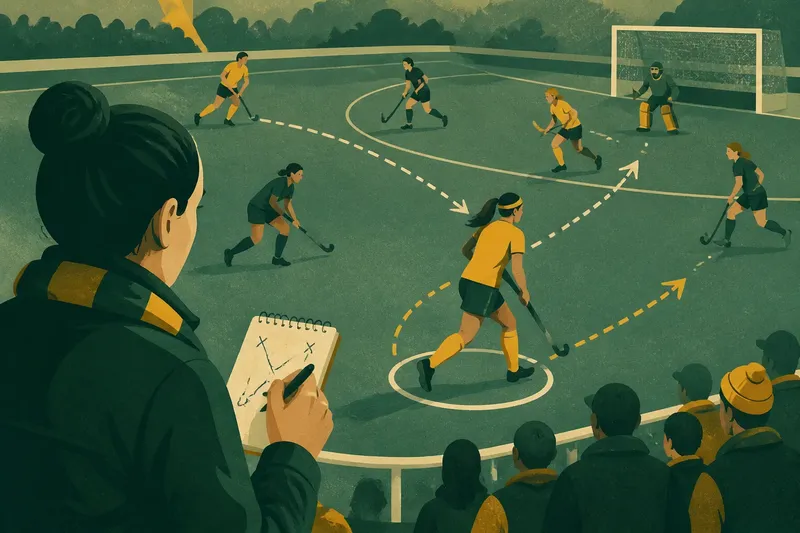
Imagine you have a ticket for a field hockey match between two clubs whose names mean nothing to you. You know the broad aim is to put the ball in the opposing goal, but the rules and roles remain hazy. Rather than trying to learn everything from the stands, you choose one player in a distinctive yellow headband. Your plan is to notice where they go, who uses the space they leave and what happens when the ball reaches them.
Choose one thread before the game gets busy
There are two useful starting points. Follow a player if someone is easy to distinguish and remains visible for much of the game. Follow a pattern if the players change positions often, or if a repeated action catches your eye: a defender stepping forward, a winger staying wide, or one team pressing immediately after losing possession.
For the imagined hockey match, the headband makes one player a practical anchor. You do not need to know their name, position or reputation. You need only to recognise them reliably. If the headband disappears in a crowd, shift to a visible feature such as their place in the formation, and allow yourself to change targets rather than spending the afternoon conducting a search party.
A pattern offers a different sort of thread. Suppose you notice one team repeatedly moving the ball towards the right edge before attempting to enter the scoring area. Track the sequence, not every touch: where the move begins, who makes the next pass and how the opposing side responds. A pattern is often easier to follow than a particular player when substitutions or fast movement make individual tracking difficult.
Pick one anchor, and let the rest of the match remain peripheral for now.
Watch what happens around your player
Once play begins, notice the headband player’s starting position and their first movement when the ball travels elsewhere. Do they stay close to a teammate, move into open space, turn towards their own goal or advance? These observations are more useful than guessing at a tactical role. You are recording visible choices, not trying to award a position from the grandstand.
Then look a little beyond the player. Who passes to them? Who follows them? Does a defender move across to meet them, or does the player receive the ball without immediate pressure? That surrounding action tells you how one person fits into the larger exchange. If your attention stays fixed on the headband alone, you may miss the reason the player has space in the first place.
Say the headband player starts near the centre, then moves towards the right touchline when a teammate takes possession. The opposing defender follows, leaving a gap nearer the middle. You have not proved that this movement was planned, but you can watch whether the attacking team uses that gap on the next passage of play. The useful result is a sharper question: what changes when this player draws someone away?
When the ball is far from your anchor, resist the urge to chase every movement across the field. Follow the player’s position and the nearby players’ reactions. You can return your eyes to the ball when play comes close again.
Let the pattern develop across several possessions
A single action can mislead. A player may stay wide because the ball is on the other side, because a teammate has moved into their usual space, or simply because the moment calls for it. Look for a recurrence before deciding that you have spotted a defining tactic.
In the imagined match, you notice the team’s right-side approach twice. On one occasion, the winger receives the ball and turns back. On another, the same route brings a pass into the circle, where a defender blocks it. The pattern is not a machine that produces the same outcome each time. It is a repeated invitation, and the other team’s response helps shape what follows.
Now add one comparison: what does the opposition do when the attack comes from the left? You do not need to track both sides in detail. A brief contrast can show whether the right-side movement is a preference, a response to pressure or simply the route that has been available so far.
This is also a good moment to notice changes. Does the marked player begin receiving the ball earlier? Does an opponent stand closer to them? Does the team stop using the same route? A change may follow a stoppage, a substitution or a shift in the game’s pace. You can register the sequence without knowing its cause.
Keep a light record of what you notice
A short note at half-time can help you keep the thread without turning the match into an assignment. Write down one movement, one recurring pattern and one question. For instance: “Headband player moves wide when their team has possession; the right side is used often; what happens when the defender stays close?” The note should fit in a sentence or two.
If you are with someone who knows the sport, ask a narrow question during a break: “What does that player’s wide position make possible?” This is easier to answer than a request for a full rules briefing, and it keeps the conversation tied to something you have seen. A knowledgeable companion may give you another interpretation; you can test it against the next few passages of play.
A pocket notebook is optional. The point is to preserve one observation long enough to compare it with what happens next. Your phone is also an effective way to miss the action, so use it sparingly.
Questions that help a first-time spectator follow play?
What should I watch if I do not know the players’ names?
Choose a visible feature, position or repeated movement, then follow the same person for a short spell. If they leave the field or become hard to identify, switch to a team pattern rather than guessing.
Should I watch the ball or the player I have chosen?
Watch the ball when it is near your chosen player and their immediate surroundings. When it moves away, track where the player goes and how others adjust; this reveals movement that the ball itself cannot show.
How can I tell whether a pattern is really recurring?
Look for the same sequence across separate possessions, while allowing for different outcomes. Note the starting area, the next action and the opponent’s response rather than treating every attack as a perfect copy.
Is it all right to switch what I am following?
Yes. A player may become difficult to distinguish, or a repeated team movement may become more interesting than an individual. Changing your focus is a sensible adjustment, not a failure to understand the match.
Leave with an observation, not a verdict
At full-time in the invented hockey match, you may still be unsure about a rule or two. But you have watched the headband player move wide, noticed a repeated route down the right, and seen how one defender’s response altered the available space. Those details give you a usable account of the game without requiring a running commentary on every score or stoppage.
On another visit, choose a different anchor: a goalkeeper’s positioning, a team’s response after losing possession, or the movement of players away from the ball. Watching a match without following the score does not mean ignoring the contest. It means giving your attention one manageable question, then letting the game supply the next part of the answer.